


EDITORIAL · CV SPORTS HQ
From Unknown
to Unforgettable
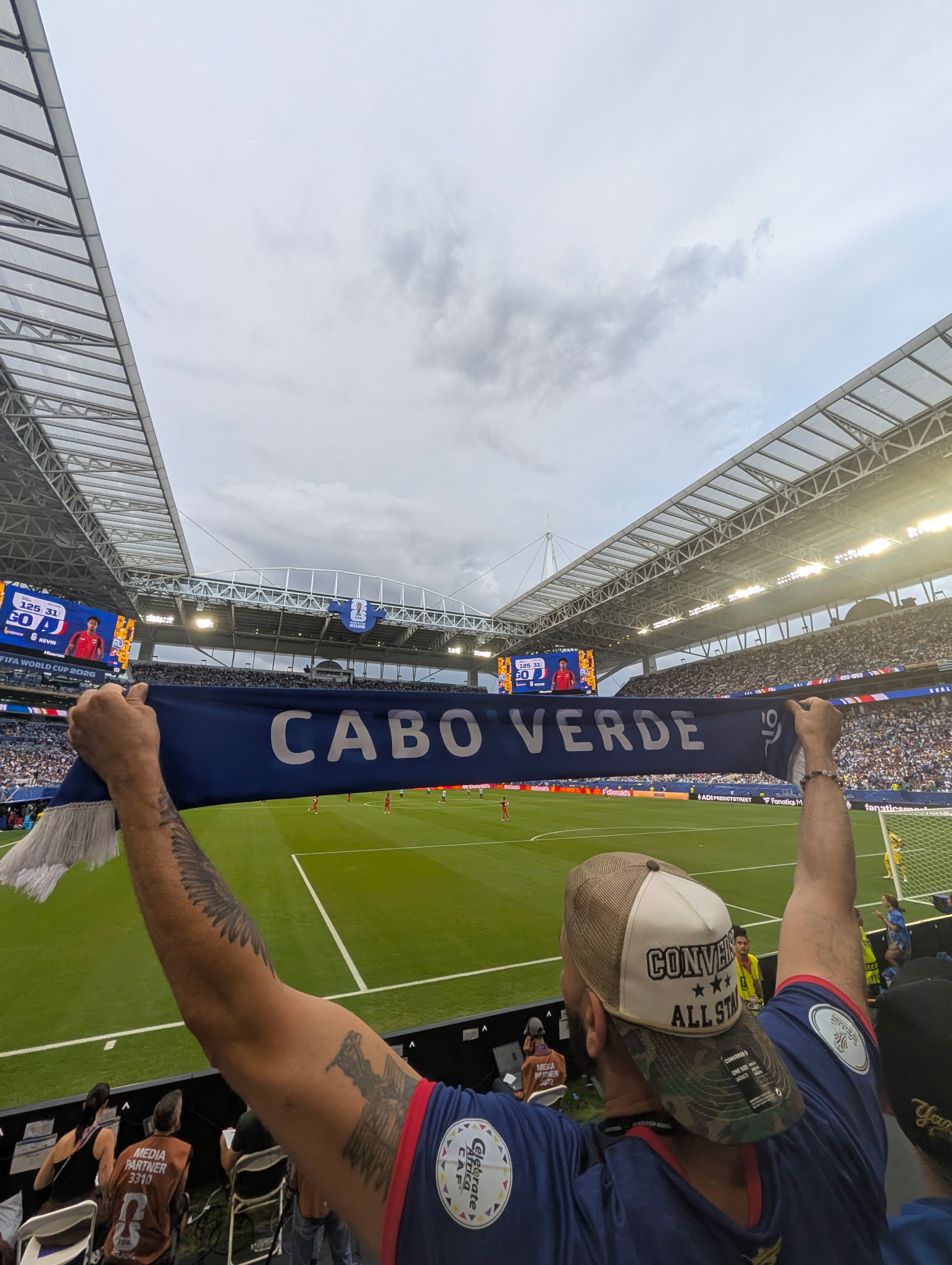
Nobody was supposed to know our name.
We were the small island nation from the Atlantic. The underdog. The first-time World Cup participant that many expected to be happy just to be here.
Then the Blue Sharks changed everything.
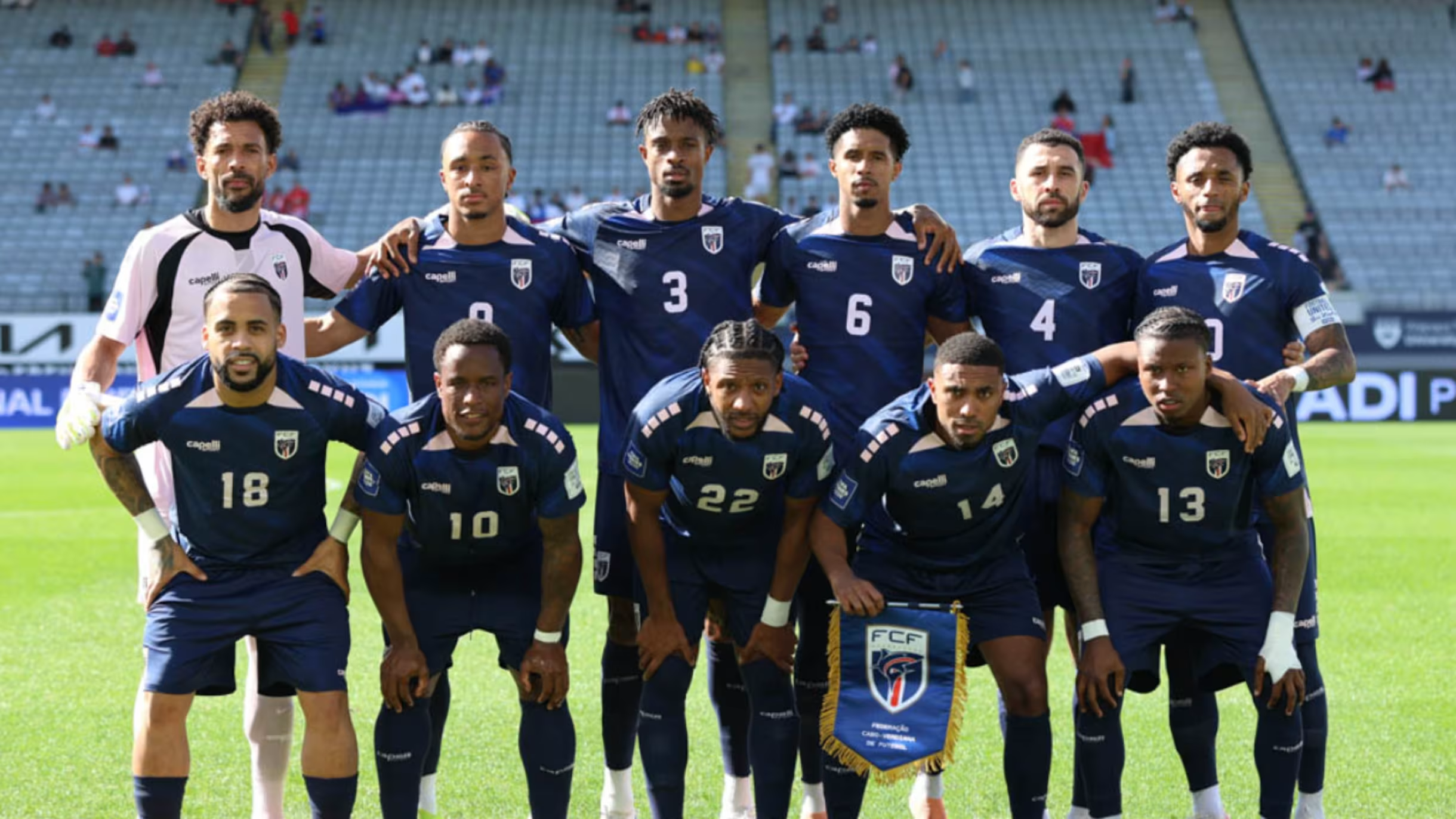
A draw against Spain. A draw against Uruguay. Ninety minutes at a time, Cabo Verde forced the football world to pay attention. The same fans who expected comfortable victories left talking about the team they barely knew before the tournament began.
The world discovered Vozinha's courage. The world discovered Kevin Pina's history-making goal. The world discovered Coach Bubista's belief. Most importantly, the world discovered Cabo Verde.
Not just the team. The people. The culture. The Morabeza. The Sabura. The pride that stretches across nine inhabited islands and millions more throughout the diaspora.
When Kevin Pina scored the first World Cup goal in Cabo Verdean history, it wasn't just a goal. It was a declaration — a moment that belonged to every Cabo Verdean watching from Praia, Boston, Rotterdam, Lisbon, Paris, Brockton, Atlanta, and beyond. For a brief moment, generations celebrated together. The impossible suddenly felt possible.
This team plays with something bigger than tactics. They play for family. They play for history. They play for every Cabo Verdean who ever had to explain where Cabo Verde is on a map.
Now nobody has to explain. The world knows.
Children are wearing Blue Sharks jerseys. New fans are learning our story. Commentators are saying our name. And with every match, the legend grows.
The Blue Sharks arrived at the World Cup as one of the least-known teams in the tournament. Today, they are one of the most beloved.
But this story was never just about football.
This story is about a people. A people shaped by the sea, by sacrifice, by migration, by resilience, and by love. A people scattered across the globe but forever connected by islands, family, culture, and memory.
The world sees a football team. We see ourselves.
The world has fallen in love.
VETERAN GOALKEEPER
Vozinha
The veteran goalkeeper whose saves against Spain felt almost supernatural. Every dive. Every stop. Every moment he stood in front of football royalty and refused to blink.
The world saw a goalkeeper making saves. Cabo Verdeans saw courage.
HISTORY MAKER
Kevin Pina
The young man who scored the first World Cup goal in Cabo Verdean history. A goal that will live forever.
A goal that belongs not only to Kevin, but to every Cabo Verdean child who has ever dreamed beyond the horizon.
SON OF THE DIASPORA
Pico Lopes
A son of Cabo Verde raised in Ireland. A reminder that Cabo Verde is not confined to islands — it lives wherever Cabo Verdeans live. In Boston. In Rotterdam. In Lisbon. In Paris. In Ireland. In Angola. In America.
The jersey may say Cabo Verde, but it carries the dreams of a worldwide family.
THE CAPTAIN · THE HEARTBEAT · THE LEADER
Ryan Mendes
And at the center of that family stands Ryan Mendes. Long before the world was paying attention, he was carrying this badge with pride. Through qualification campaigns. Through disappointments. Through victories. Through years when nobody outside our community cared. He never stopped believing. He never stopped leading. He never stopped carrying Cabo Verde on his shoulders.
The goals matter. The assists matter. But his greatest contribution has been his devotion — his commitment, his sacrifice, his refusal to let this dream die.
Every great team needs talent. Every historic team needs a heart. Ryan Mendes is the heart of the Blue Sharks.
And perhaps that is why this story feels so emotional. Because the deeper you go into Cabo Verde football, the more you discover that everything comes back to family.
I felt that myself at Miami Airport. There I met Sidney Lopes Cabral's mother — a lovely woman. We talked. We laughed. We shared stories. And like so many Cabo Verdean mothers, she treated me as if I were one of her own. Within minutes, I wasn't a stranger anymore. I was family.
She introduced me to relatives who had traveled all the way from Angola to Miami to support the Blue Sharks. Think about that — a family crossing continents. An ocean connecting Africa, Europe, North America, and Cabo Verde. All because of love. Love for family. Love for country. Love for a team that has become something bigger than football.
That moment reminded me of something important. The Blue Sharks are not just eleven players on a field. They are the reflection of who we are — a people who welcome you, a people who embrace you, a people who carry each other.
And when Kevin Pina scored that historic goal, something happened that statistics will never explain. For a moment, time stood still. Then came the eruption — not just inside the stadium, but across Praia, Mindelo, Fogo, and Santiago. Across Boston and Brockton. Across Rotterdam, Lisbon, Paris, and Angola. Across every place where Cabo Verdeans have planted roots while keeping their homeland close to their hearts.
People cried. People screamed. People hugged strangers. People called family. Some looked toward heaven, thinking of parents, grandparents, brothers, sisters, and friends who should have been there to witness it. For one beautiful moment, the entire Cabo Verdean world felt connected.
Because Cabo Verdeans do not chant, sing, dance, and celebrate so the world can see us. We do it because our souls are speaking. Every chant says keep fighting. Every drumbeat says keep believing. Every song says you are not alone. Every flag says remember who you are.
What the world sees as celebration is actually a conversation — between the islands and the diaspora, between generations, between a people and the players representing them. When Cabo Verdeans sing, the players hear home. When Cabo Verdeans dance, the players feel pride. When Cabo Verdeans chant, the players feel millions of voices carrying them forward.
That is why this team fights the way it does. Not for fame. Not for headlines. Not for attention. For family. For home. For each other.
Now the world knows. People are discovering Morabeza. People are discovering Sabura. People are discovering a nation whose spirit is far larger than its size. The world came to watch giants. Instead, it fell in love with the underdog.
And no matter what happens next, nobody can ever take this away: the Blue Sharks did not just introduce Cabo Verde to the world. They reminded Cabo Verdeans everywhere who they have always been — a family, a people, a nation, a spirit.
Somewhere tonight — whether in Praia, Boston, Rotterdam, Lisbon, Angola, Miami, or on a small island surrounded by the Atlantic Ocean — there is a Cabo Verdean wiping away tears and smiling at the same time. Because for the first time, the world sees us the way we have always seen ourselves.
Small in size. Limitless in spirit.
And the story is still being written.
🇨🇻 A LITTLE KRIOLU
In Cape Verdean Creole (Kriolu), Morabeza and Sabura are two of the most important cultural concepts. They represent the famous hospitality, relaxed lifestyle, and joyful spirit of the islands.
Kabuverdianu (Kriolu) is the "unofficial official" language of the country. While Portuguese remains the administrative tongue, Kriolu is spoken by virtually everyone at home and on the streets.
"Cabo Verdeans don't sing, dance, and celebrate for the world. We do it because our souls are talking to the players. Every chant says keep fighting. Every drumbeat says keep believing. Every celebration reminds the Blue Sharks that they don't carry a nation on their backs — they carry a nation beside them."